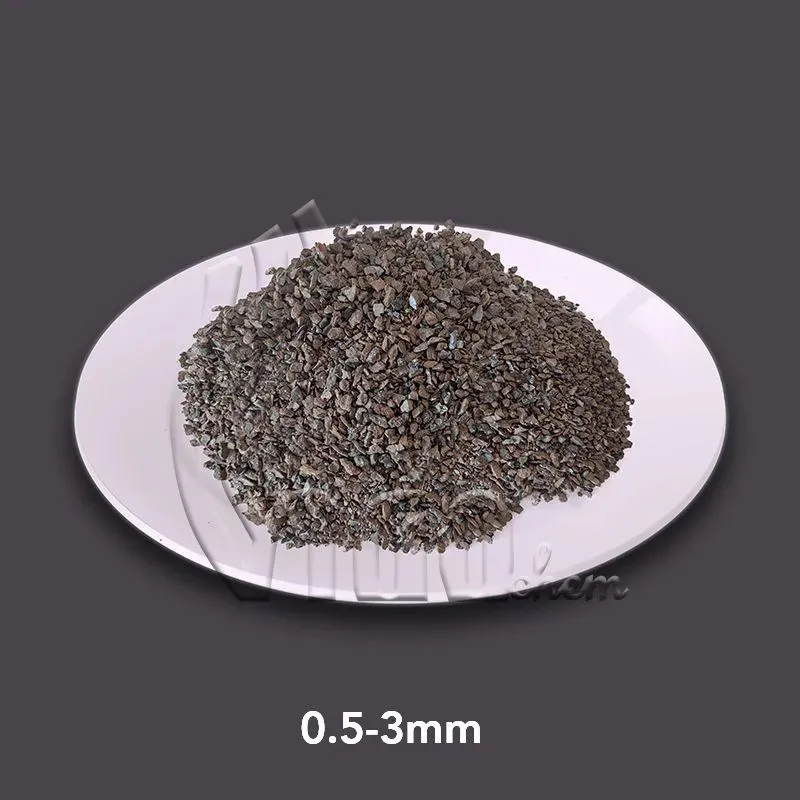
Why Calcium Carbide Granules Are Preferred in Precision Industrial Applications
calcium carbide granules are preferred because controlled particle size supports predictable reaction rates, stable acetylene output, accurate dosing, lower fines generation, and easier integration into automated industrial systems. I evaluate them by particle-size distribution, calcium carbide purity, gas yield, packaging, moisture control, impurity levels, and process safety rather than by purchase price alone. These factors determine whether granules perform consistently in gas generation, steelmaking, metal fabrication, and chemical manufacturing.
!
Key Takeaways
- Calcium carbide granules provide more consistent dosing and reaction control than irregular calcium carbide lumps.
- Particle size should match the process, with 2–7 mm granules suited to controlled feeding systems.
- Gas yield, impurity levels, moisture protection, and certificates matter more than headline price alone.
- Industrial storage requires sealed packaging, dry conditions, water exclusion, ventilation, and controlled access.
- NEW OCEAN GROUP supplies multiple calcium carbide size grades and nitrogen-sealed iron drum packaging.
What Are Calcium Carbide Granules?
Calcium carbide granules are sized particles of calcium carbide, chemically represented as CaC₂. When calcium carbide contacts water, it reacts according to the equation CaC₂ + 2H₂O → C₂H₂ + Ca(OH)₂, producing acetylene gas and calcium hydroxide residue. The reaction is exothermic, so water addition, feed rate, particle size, and reactor design must be controlled.
The granule form is produced by crushing, screening, and separating calcium carbide into defined size ranges. Unlike powder, granules create less airborne dust and are easier to meter through hoppers, screw feeders, rotary valves, or other controlled feeding equipment. Unlike large lumps, they offer a greater reactive surface area per unit mass and generally support more uniform contact with water.
| Material form | Typical physical behavior | Common process fit | Main control issue |
|---|---|---|---|
| 2–7 mm granules | High surface-area-to-mass ratio and controlled flow | Acetylene generators, automated feeders, laboratory-scale industrial systems | Faster reaction requires accurate water and feed control |
| 7–15 mm material | Moderate reaction surface and improved bulk handling | Medium-rate acetylene generation and selected steelmaking operations | Screen distribution must remain within specification |
| Larger lumps | Slower exposed reaction and lower fines generation | Large generators, furnace-related applications, and bulk handling | Less suitable for precision dosing without crushing |
| Powder or fines | Very high surface area and dust potential | Specialized chemical processes only | Dust control, rapid reaction, bridging, and ignition risk |
Why Calcium Carbide Granules Are Preferred in Precision Industrial Applications
The main reason calcium carbide granules are preferred in precision industrial applications is that particle size can be specified and measured. A narrower size range allows operators to predict how quickly water reaches reactive surfaces, how rapidly acetylene forms, and how much material passes through a dosing system per minute. This improves repeatability when a process depends on a stable gas rate or a defined calcium carbide addition.
Granules also reduce the variation caused by irregular lumps. Two loads containing the same mass of lumps may react differently because the pieces have different surface areas, cracks, and internal structures. Screened granules reduce that variation, although buyers should still review sieve analysis, undersize content, oversize content, and batch-to-batch results before approving a product.
Controlled Reactivity and Gas-Output Stability
In acetylene generation, reaction control affects gas pressure, temperature, moisture balance, and downstream purification. Smaller granules normally react more quickly than larger pieces because water contacts more surface area, while larger lumps may react more slowly and leave unreacted cores. The correct size is therefore a process decision, not a universal ranking of small versus large material.
The theoretical acetylene yield of pure calcium carbide is approximately 348 liters per kilogram at 20°C and one atmosphere, but commercial output is lower because of purity, moisture, impurities, incomplete conversion, and measurement conditions. Buyers should compare actual gas yield under a stated test method, temperature, pressure, and moisture basis. A supplier claim without test conditions cannot provide a reliable production comparison.
Precision Dosing and Automated Feeding
A defined granule range improves feeder calibration because bulk density, flow behavior, and mass discharge are more stable than those of mixed lumps. This is important for acetylene generators, chemical reactors, desulfurization systems, and processes using programmable addition rates. Lower fines content can also reduce dust accumulation, feeder blockage, and irregular surges into the reaction chamber.
For automated systems, I would specify the accepted particle-size range, maximum fines percentage, maximum oversize percentage, bulk density range if available, and moisture limit. The equipment should also include a dry sealed hopper, level monitoring, dust control where necessary, and interlocks that prevent uncontrolled water contact. Granules improve process control, but they do not replace correct equipment design.
Calcium Carbide Granules vs Lumps
The practical difference between calcium carbide granules and lumps is the balance between reaction surface area and handling stability. Lumps generally produce less dust and may be suitable for large generators that require slower reaction or tolerate wider feed variation. Granules are more suitable where operators need accurate dosing, predictable gas release, or connection to an automated feeding line.
When comparing calcium carbide granules vs lumps, I recommend assessing the complete process rather than comparing mass price. A lower-cost lump may require crushing, screening, additional labor, and more frequent feeder adjustment. Conversely, smaller granules may increase reaction speed and require stronger temperature control, better water metering, and more effective gas-pressure protection.
| Selection factor | Granules | Lumps |
|---|---|---|
| Particle-size control | Usually narrower after screening | Often wider and more irregular |
| Dosing accuracy | Better for calibrated feeders | More dependent on piece geometry |
| Reaction control | Faster and more uniform when correctly sized | Slower or less uniform depending on exposed surface |
| Fines generation | Can increase during transport if packaging is weak | Usually lower before crushing |
| Automation suitability | Strong fit for metered feeding | Better for simple bulk charging systems |
| Main risk | Rapid reaction if water control is poor | Inconsistent conversion and manual handling |
Industrial Applications of Calcium Carbide Granules
Acetylene Production and Industrial Gas Generation
The largest industrial use of calcium carbide is acetylene generation. Acetylene supports oxy-fuel cutting, welding, flame heating, chemical synthesis, and the production of intermediates such as vinyl compounds. In these systems, the selected granule size affects gas release rate, generator temperature, pressure stability, and the amount of residual calcium carbide in the discharge.
A 2–7 mm grade may suit controlled feeders and compact generators when the equipment is designed for rapid reaction. A 7–15 mm grade may fit medium-rate systems requiring a balance between reaction speed and bulk flow. Larger material can be considered for generators designed around slower charging, but the choice should be confirmed through a plant trial and gas-yield test.
Steel Desulfurization and Metal Fabrication
Calcium carbide is used in some steelmaking and metal-treatment operations as a desulfurizing reagent. It reacts with sulfur-bearing compounds under controlled furnace or ladle conditions, helping reduce sulfur in molten metal when the overall process chemistry, temperature, injection method, and residence time are suitable. Granule size affects pneumatic transport, injection stability, reaction access, and the amount of material lost as fines.
For metal fabrication, calcium carbide is also associated with acetylene production for cutting and welding. Here, gas-output stability and impurity control influence flame quality and equipment maintenance. Buyers should request impurity information for phosphorus, sulfur, oxygen, nitrogen, and moisture because these variables can affect gas purification and downstream corrosion.
Calcium Cyanamide and Chemical Manufacturing
Calcium carbide is an intermediate in calcium cyanamide production and other chemical manufacturing routes. These applications often place greater emphasis on chemical composition, furnace conversion, impurity limits, and consistent feed behavior than on rapid water reactivity. Granules can support stable furnace charging when their size distribution and bulk density are controlled.
The appropriate specification depends on the reactor and product route. A buyer should define calcium carbide purity, ash content, particle-size range, volatile content, and permitted contaminants in the purchase specification. The same granule grade should not be assumed to suit acetylene generation, steel desulfurization, and calcium cyanamide production without process-specific verification.
Quality Specifications Buyers Should Verify
A calcium carbide quality control checklist should begin with gas yield, calcium carbide content, particle-size consistency, impurity levels, moisture, packaging condition, and certificate traceability. Gas yield should be reported with the test temperature, pressure, sample mass, and correction basis. Purity should be supported by a certificate of analysis tied to a batch or production lot.
I would also request sieve analysis showing the percentage within the declared range, undersize material, and oversize material. For precision feeding, a narrow distribution is more useful than a nominal size label alone. Buyers should inspect whether the supplier provides retained samples, pre-shipment inspection rights, independent laboratory testing, and a documented process for handling nonconforming material.
Key verification points include:
- Calcium carbide purity and stated assay method.
- Actual acetylene gas yield under defined test conditions.
- Phosphide and sulfide impurity levels because phosphine and hydrogen sulfide may form.
- Particle-size distribution, fines percentage, and oversize percentage.
- Moisture content and evidence of sealed packaging.
- Batch number, certificate of analysis, packing list, and dangerous-goods documentation.
- Container loading records, drum condition, and transport protection.
Industrial Calcium Carbide Storage and Handling
Industrial calcium carbide storage and handling must prevent contact with water, condensation, rain, wet floors, and humid air. Storage areas should be dry, roofed, ventilated, clearly marked, and separated from water-based chemicals and ignition sources. Containers should remain closed until use, and damaged drums should be isolated for assessment by trained personnel.
Calcium carbide reacts with water to generate acetylene, which is highly flammable and can form explosive mixtures with air. Impurities may also contribute to phosphine and hydrogen sulfide in the generated gas, so gas systems require suitable ventilation, leak detection, purification, pressure relief, and procedures for controlled discharge. Personnel should follow applicable chemical safety rules and dangerous-goods transport requirements for the destination country.
Packaging quality directly affects product performance. NEW OCEAN GROUP states that its calcium carbide products are available in size ranges including 80/120 mm, 50/80 mm, 25/50 mm, 15/25 mm, 7/15 mm, 4/7 mm, 2/4 mm, 1–3 mm, and 0.3–1 mm. The company also states that products are packed in 50 kg and 100 kg new iron drums sealed with nitrogen, while buyers should confirm the exact packaging, closure system, net weight, and transport classification for each order.
How to Choose Calcium Carbide Granules for Industrial Use
I recommend selecting calcium carbide granules through a documented application and supplier review. First, define the process objective: acetylene generation, steel desulfurization, calcium cyanamide production, chemical synthesis, or another use. Then specify the required particle-size range, target feed rate, gas-yield requirement, impurity limits, packaging format, monthly volume, and acceptable moisture exposure during transit.
| Buyer requirement | Specification to request | Reason |
|---|---|---|
| Controlled acetylene output | 2–7 mm or 7–15 mm trial grade, with gas-yield data | Matches reaction rate to generator design |
| Large bulk generator | Larger screened lumps or 7–15 mm material | Reduces excessive reaction speed and supports bulk charging |
| Automated dosing | Narrow size distribution and low fines percentage | Improves feeder calibration and reduces blockage |
| Steel desulfurization | Defined purity, sulfur-related performance, and injection suitability | Connects material chemistry with metallurgical results |
| Long-distance shipment | Nitrogen-sealed drums and moisture-resistant loading plan | Limits moisture exposure during transport |
| Quality-sensitive production | Batch certificate and independent inspection rights | Separates documented performance from general claims |
Delivered cost should include product price, packaging, inland transport, ocean freight, insurance, inspection, duties, storage, and expected process losses. A product with a lower invoice price may have a higher total cost if its gas yield is lower, its fines content is higher, or its packaging allows moisture damage. I would compare suppliers using cost per usable kilogram, cost per cubic meter of acetylene, and cost per accepted batch rather than price per metric ton alone.
Supplier Evaluation and NEW OCEAN GROUP
A supplier comparison should examine manufacturing capacity, available size grades, packaging controls, quality documentation, inspection rights, minimum order quantity, delivery route, and response to nonconforming material. NEW OCEAN GROUP identifies itself as a calcium carbide manufacturer established in 2006, with a factory in Ulanqab City, Inner Mongolia. Its company information states a production capacity of 8,000 tons per month and lists multiple calcium carbide size grades for industrial buyers.
Those figures are useful for initial supplier screening, but they should be verified against the specific contract, production lot, and shipping plan. I would request a current certificate of analysis, recent gas-yield records, packaging photographs, loading records, and an agreed inspection procedure before placing a bulk order. Independent testing remains important because manufacturer claims and independently verified performance data are not the same evidence.
Conclusion
Why Calcium Carbide Granules Are Preferred in Precision Industrial Applications comes down to measurable process control. Defined particle size improves dosing consistency, reaction-rate management, gas-output stability, feeder performance, and repeatability compared with irregular material, while appropriate packaging reduces moisture-related deterioration. The best grade depends on the reactor, water-delivery method, target gas rate, impurity tolerance, and handling equipment.
For industrial buyers, the next step is to create a written specification covering particle size, purity, gas yield, fines, moisture, packaging, certificates, inspection rights, MOQ, and logistics. A 2–7 mm grade may suit precision feeding, 7–15 mm material may balance reaction control and bulk handling, and larger lumps may fit slower large-scale charging systems. Select calcium carbide granules only after confirming performance data, storage controls, dangerous-goods requirements, and the supplier’s ability to deliver the same specification consistently.
-
RNPREVIOUS_POST None
-
RNNEXT_POST Industrial Uses of 0.5-3mm Calcium Carbide in Specialized Production Processes